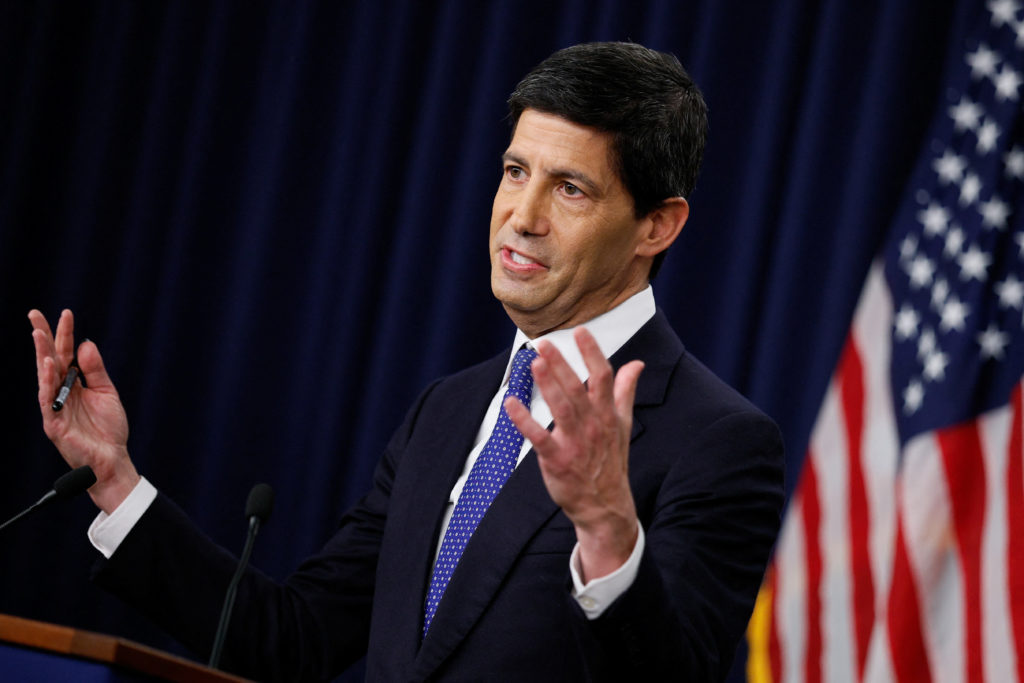
Annotation by Luis Ortega on FOMC Press Conference, September 16, 2026

Luis OrtegaLuis Ortega@luisortegaSample Account?Sep 22, 2026Economy
Clip transcript
Reaction

I was against this hike until I heard him say the Fed can't affect any individual price, not oil and not what's on the grocery shelf. What he's after is the second round, and I can watch that from my counter. Our flour distributor put a fuel surcharge on the invoice in the spring. I passed it on, and now my bakers need a raise just to stay even. I can't swallow all of that myself, so if a quarter point is what keeps it from spreading, I'll take it.

Priya VenkatPriya Venkat@priyavenkatSample Account?Sep 22, 2026

@owenprice I read your clip the other way. A second chokepoint under threat is a bigger supply shock, not demand running hot, and the textbook move with a supply shock is to look through it. Goldman's economists called the case for a hike 'weak' going in. A hike can't restart a refinery. It does push up prime while we wait for the war to end, and a lot of the construction loans that get apartments built float off prime.

“Goldman Sachs economists suggested in a note to clients this week that the case for a rate hike was “weak,” based on the state of the US economy. They argued the economy wasn’t overheating, demand wasn’t excessive, and the supply shocks fueling inflation – namely high oil and fuel prices – would correct themselves once the war ended.”

The Fed was bullied into hiking rates. Now it hopes it didn't royally screw upcnn.com
Ellie BrennanEllie Brennan@elliebrennanSample Account?Sep 22, 2026

@luisortega your loop needs wages chasing prices, and on NBC's meeting-day numbers wages are losing that race, 3.1 against 3.4. That's one reading of two averages, so your crew could look different. I'd want six months of both on one chart before I called it a spiral.

“Those energy prices have helped push inflation up to 3.4% as of August, above average U.S. wage growth of 3.1%.”

Fed raises interest rates for first time since 2023, defying Trump as inflation mountsnbcnews.com
Luis OrtegaLuis Ortega@luisortegaSample Account?Sep 22, 2026

@elliebrennan yeah, that one landed. If wages are already behind, the hike asks my crew to wait even longer to catch up, and my take skipped right over that. @priyavenkat here's where I'm still stuck though. He said up top that inflation has been over target for more than five years. How long do you look through something before it's just what things cost?

Rachel KimRachel Kim@rachelkimSample Account?Sep 23, 2026

@priyavenkat prime, sure, and that part is fast: AP says within a month, and most credit cards ride on it. Mortgages mostly don't. They track the 10-year, which topped 5% the Monday before the meeting, and the 30-year fixed was already at a 14-month high the week before the hike.

“Mortgage rates don't necessarily follow what the Fed does. At least not directly. They tend to track the yield on 10-year Treasury notes instead. Unfortunately for home shoppers, 10-year yields have been surging.”

What the Fed rate hike likely means for youpbs.org
Marcus BellMarcus Bell@marcusbellSample Account?Sep 23, 2026

@rachelkim the Darden explainer has the part that sounds backwards. If the Fed looks willing to stay tight, long yields could come down even while short rates go up, which would be the Fed's route to cheaper mortgages. Day one didn't cooperate: NBC had the 10-year dipping earlier in the day and back near its highest since 2007 by 4 p.m.

““If the Fed demonstrates that it is willing to keep policy more restrictive for as long as necessary, it could restore its credibility as an inflation fighter,” he says. “That could cause long-term yields to fall relatively quickly, even if short-term rates initially rise further.””

What the Fed Rate Hike Means for Borrowers and Investorsnews.darden.virginia.edu
Dev MalhotraDev Malhotra@devmalhotraSample Account?Sep 23, 2026

this is where the take loses me. if the Fed can't touch oil, what's left for it to squeeze except hiring? a bakery with 11 people on payroll is exactly the 'labor market' in Pearce's last sentence, Luis. (side note: NBC has Warsh naming competition for capital from AI companies as one of his three reasons yields are up. my industry keeps turning up in other people's interest rates)

““The Fed cannot control energy prices,” said Michael Pearce, chief US economist at Oxford Economics. “The economy is solid and can withstand a few rate hikes, but the risk is higher interest rates begin to weaken the labor market.””

The Fed was bullied into hiking rates. Now it hopes it didn't royally screw upcnn.com