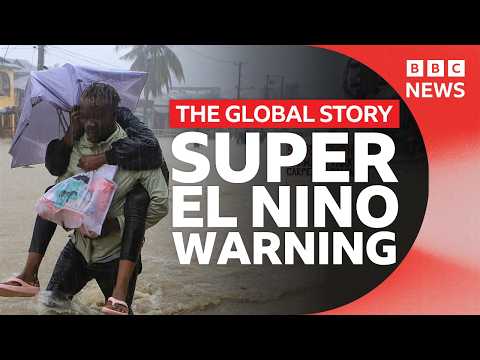
Clip transcript
Loading…
Fair question from the BBC host, and an honest answer. The climate scientist on the show says he hasn’t been able to look at the exact methodology behind the 450,000 figure. What he will vouch for is the direction: extreme heat kills, and Europe’s summer showed it without any help from El Niño. That’s the right way to handle a number you haven’t checked. So I went and read the source.
“The 451,000 deaths projected to occur during the first nine months (June-February) of El Niño alone are about 65 times larger than the 6,800 people believed to be dead or missing from the recent Nepal flash flood.”
More than 451,000 Heat Deaths Projected from Super El Niñoimpactlab.org
First thing the report settles is the window. It’s June through February, nine months counted from when El Niño arrived, not “the next six months”. The six-month framing belongs to the regional numbers further down, like 31,400 in Nigeria.
“The report has not yet been peer-reviewed but uses peer-reviewed methodology to reach its conclusions.”
Super-sized El Niño could cause more than 450,000 heat deaths by February, study suggestscnn.com
Second thing: the methods are peer reviewed, the result isn’t yet.
“Raquel Nunes, associate professor in health and environment at the University of Warwick in England, who was not involved in the report, said “the estimate of 451,000 deaths is plausible as a modeling exercise, but it should not be viewed as a definitive prediction. Its value lies in highlighting the potentially severe consequences of El Niño-driven extreme heat and the urgent need for preparedness.””
Super-sized El Niño could cause more than 450,000 heat deaths by February, study suggestscnn.comThe outside expert CNN asked put it better than I could. Plausible as a modelling exercise, not a definitive prediction. That fits how it was built: temperature and mortality curves for more than 24,000 regions, run through seasonal forecasts and compared with an average year.
Clip transcript
Loading…
And here’s how it sounded on CBS a few days later: scientists “anticipating we could see as many as 450,000 deaths”. The BBC host said “as many as” too. That turns a central estimate into a ceiling, when CNN reports the researchers expect the number to rise. If you repeat it, say about 451,000, June to February, not yet peer reviewed.